Worship Guitar Mastery: Joey Cobra's Sunday Deadline
Worship Guitar Mastery is Joey Cobra's Skool room for volunteer worship guitarists: 946 members, a low monthly price and transposed tabs in every key.
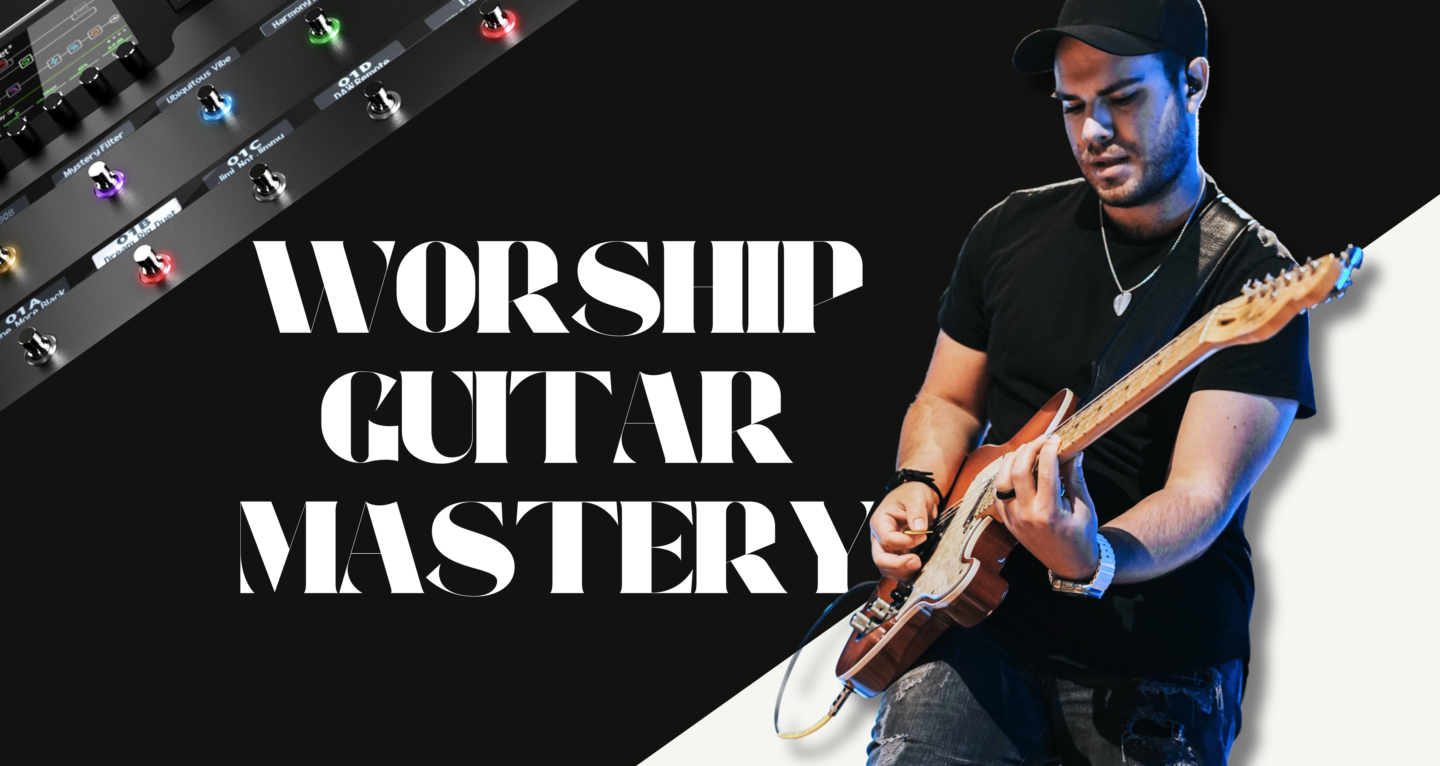
Worship Guitar Mastery is Joey Cobra's Skool community for volunteer church guitarists, priced at $6 a month with a free trial, holding 946 members and ranked 30 in the Skool Games Music top 50. Its entire offer is built around one recurring deadline that no other guitar community has to solve: Sunday arrives every week whether you learned the set or not.
That is the sharpest audience definition in the Music category. Almost every other guitar room sells improvement on an open-ended timeline. This one sells being ready by a fixed date, for people who are not being paid to be there.
The numbers
- Music niche (volunteer and part-time worship guitarists)
- Rank 30 in the Skool Games Music top 50
- 946 members
- $6/mo with a free trial, one of the lowest paid prices in Music
- 3 admins, roughly one per 315 members
- 31 courses, the deepest library we have counted in the category
- 540 posts since 17 August 2025
- 4.8 from 19 Skool reviews, the largest review count in our Music set
- 6,558 visitors on the 29 August pull, third highest in our Music set
Who is Joey Cobra?
Joey Cobra runs the community as @joey-cobra-8569 and the about page credentials him in six words: 20 or more years of Sunday morning experience. Not tours, not sessions, not subscribers. Sunday mornings.
That is a deliberate choice and it is the right one for this buyer. A worship volunteer is not intimidated by a lack of virtuosity, they are intimidated by the specific competence of turning up on a Sunday with the set learned in the right key on the right patch. Twenty years of having done exactly that is a more relevant credential than a discography would be.

How Worship Guitar Mastery sells
It opens by describing a Saturday night, not a benefit. The page names the exact sequence its buyer knows: the set list drops late, the key gets changed, and you are learning songs at 11pm on a Saturday. Then it says the community was built for that reality.
Three specifics in that opening do the work. "Set list drops late" is something only somebody inside a church music team would write. "Key changed" is the single most common cause of a bad Sunday for a guitarist, because it invalidates everything you practised. And "11pm Saturday night" is a time, not an adjective. Nobody outside the audience would recognise the scene, and everybody inside it will.
The deliverable that follows is the exact inverse of the problem. Fully transposed tabs in every key, updated weekly, so a key change becomes a download instead of a crisis. The offer is not "get better at guitar", it is "make the thing that ruins your week stop happening".
What the about page actually says
The full Worship Guitar Mastery about page follows, with emoji removed, the bulleted markup rendered as lines and the long dashes replaced. Five lines do the selling. The markers explain each one.
2Set list drops late. Key changed. Learning songs at 11pm Saturday night.
Worship Guitar Mastery was built for that reality.
3Every week, fully transposed tabs in every key plus video tutorials so you're ready for Sunday in the time you actually have.
Join 940+ worship guitarists who stopped scrambling.
What's Inside:
100+ Fully transposed tabs in every key plus video tutorial (Elevation, Bethel, Phil Wickham, Brandon Lake and more)
4PATCH PASS (30+ Patches) - Supporting Helix, POD Go, HX Stomp and HX Effects
Worship Team Ready Assessment
Nashville Numbers Mastery Course
Everything Brewster Course
Ultimate Speed Exercises Course
The "Lictionary", a library of guitar riffs
Backing Track Bunker (for improv practice)
Hosted by Joey Cobra, 20+ years of Sunday morning experience.
5Try it free. Just $6/month, less than a pack of strings.
Price goes up when we reach 1,000 members!
The cheapest room in the Music top 50 that is not a token
At $6 a month, Worship Guitar Mastery is the second-lowest paid price we have recorded in Music, above only Key Learners Piano Club at $1. The difference is that $1 reads as a placeholder and $6 reads as a price, and the page makes sure of it by anchoring against a pack of strings rather than against other courses.
| Music room | Members | Price | Music rank |
|---|---|---|---|
| Key Learners Piano Club | About 2,300 | $1/mo | 20 |
| Worship Guitar Mastery | 946 | $6/mo | 30 |
| No Theory Club | 8,824 | $9/mo | 31 |
| Piano with Rebecca B | 365 | $12/mo | 38 |
| Pro Gig Academy (Plus) | 104 | $125/mo | 19 |
The anchoring choice is the interesting part. Comparing a subscription to a consumable the buyer already replaces regularly moves the purchase out of the "another monthly bill" category and into the "guitar spending" category, where this reader has an established budget and no guilt. That is a better frame than any percentage discount would have been.
The member-count trigger, done properly: "Price goes up when we reach 1,000 members" at 946 members is a deadline the reader can verify on the same page they are reading, because the member count is displayed by Skool. Most scarcity claims on about pages are unverifiable. This one audits itself.
Volunteers are a different customer
Everybody in this room is unpaid. That single fact explains the price, the deliverables and the reason the community works at all.
A volunteer cannot justify a $50 monthly course, because there is no income to set it against. They can justify $6, because it is smaller than the cost of the gear they already bought for a job nobody pays them for. And they have a hard deadline every seven days, which is the strongest retention mechanic a subscription can have: the reason to keep paying arrives again next Sunday whether they used the library or not.
That is why the churn logic here is unlike a general guitar room's. A beginner learning for pleasure cancels when motivation dips. A worship volunteer cancels when they leave the team, which happens far less often and for reasons unrelated to the product.
31 courses and 6,558 visitors
Two numbers stand out against the category. Thirty-one courses is the deepest library we have counted in Music, on a room ranked 30th, and 6,558 visitors is the third-highest traffic we have recorded in the Music top 50, behind Black Suit Music and Bulletproof Guitar Club.
Those are not the numbers of a room in the bottom half of the board, and the explanation is the price. The Skool Games board orders rooms by revenue, so 946 members at $6 produces a modest number no matter how good the library is. Read the rank as a statement about the price point rather than about the product.
The nineteen reviews at 4.8 are worth more attention than the rank. Nineteen is the largest review count in our Music set by some distance, on a room with fewer than a thousand members, which points to an unusually engaged base. Skool prompts for reviews automatically at day 31, so a high count on a small room means members are staying past the first month and answering when asked. Our Reviews feature explainer covers how that prompt works.
The funnel, step by step
Church volunteers searching for worship tabs and gear patches arrive from search, meet an about page that describes their Saturday night, take the free trial, and stay because the deadline recurs.
The gear angle is an underrated entry point. Somebody searching for Helix worship patches is not looking for a community, but the patch pass gives them a reason to land on the page, and the page then describes their Saturday night. A specific artefact that solves a narrow technical problem is one of the cheapest ways to reach an audience that would never search for "community".
The formula you can copy
Write the scene, not the benefit. "Set list drops late. Key changed. Learning songs at 11pm Saturday night." is three fragments, no adjectives, and it identifies the reader more precisely than a paragraph of positioning would. The general principle is in how to write a Skool about page.
Anchor the price against something the buyer already buys. A pack of strings is not a competitor, it is a familiar consumable, and comparing to it moves the spend into a budget that already exists. Most rooms anchor against private lessons, which is a bigger number but an unfamiliar one. More on this in how to price a Skool community.
And find the audience with a recurring deadline. Retention is the whole game in a low-ticket subscription, and an audience with an external weekly obligation retains for reasons that have nothing to do with your content calendar. The wider low-ticket economics are in Skool membership tiers and the trial mechanics in our free trial explainer.
Frequently asked questions
What is Worship Guitar Mastery?
Worship Guitar Mastery is Joey Cobra's Skool community for volunteer worship guitarists. It has 946 members, costs $6 a month after a free trial, and contains 31 courses plus 100 or more fully transposed tabs in every key with video tutorials, a patch pass of 30 or more amp patches, a Nashville numbers course, a riff library and backing tracks. It ranks 30 in the Skool Games Music top 50 and holds a 4.8 rating from 19 Skool reviews.
How much does Worship Guitar Mastery cost?
Six dollars a month, following a free trial. The about page states that the price goes up when the community reaches 1,000 members, and at the time of our 29 August 2026 pull it stood at 946, so that threshold is close. Check the live about page for the current price rather than relying on any figure quoted elsewhere, since member-count triggers by their nature expire without notice.
What is the Nashville number system?
It is a way of writing chord progressions as numbers relative to the key rather than as chord names, so a progression written 1 to 5 to 6 minor to 4 works in any key without rewriting. Worship and session musicians use it because keys change constantly to suit whoever is singing, and a numbered chart survives a key change that a lettered chart does not. It is the reason a worship guitarist can be handed a chart on the morning and play it in a key they did not practise.
How do you learn worship guitar songs quickly?
The practical route most worship players describe is to learn the shape of the song rather than every part: get the progression in numbers so a key change costs nothing, learn the one signature figure that makes the song recognisable, and use a capo to keep familiar shapes under your fingers in unfamiliar keys. Tone comes last. A correct part on a plain sound serves the room better than an approximate part on a perfect patch.
Is a $6 community worth paying for?
At that price the question is really whether you will open it. For a volunteer who plays most Sundays, a library of pre-transposed charts for songs their church actually uses saves an hour or two a week, which is a straightforward trade. For somebody who plays occasionally or whose church uses a repertoire outside the Elevation and Bethel end of the catalogue, the library will match their set list less often, and the free trial is the way to find that out.
Do worship guitar patches work with my pedal?
The community's patch pass states support for Helix, POD Go, HX Stomp and HX Effects, all of which are Line 6 devices in the same family, so patches transfer between them with some adjustment. If you play through a different modeller or a traditional pedalboard, the patch pass will not be usable as supplied and the value of the membership rests on the tabs, courses and community instead.
Start your Skool community
Ready to build a community of your own? Start on Skool through our link. We may earn a commission if you create and keep a paid community, at no extra cost to you.
Start your Skool community →Keep reading
Jooba Guitar: Jaco Uys Sells a $10 Room for $3 on Skool

Dave Simpson Guitar World: The $35 Skool Room Reviewed

Clarity Guitar Studio Review: Andre Fludd's $69 Skool
Alex Graf Bluegrass Guitar: Inside the $25 Skool Club

Shredders University Review: Jack Wood's $127 Skool

Guitar Breakthroughs: Tony Cull's $29 Skool Reviewed
Practice Room Pro: Jon Bjork's Free Skool Group With a $149 Coaching Tier
Pro Gig Academy: Finbar Horgan's Three-Rung Skool Funnel

No Theory Club: The Largest Guitar Room We Have Measured
