The Music Licensing Club: Eric Campbell's $9 Skool
The Music Licensing Club by Eric Campbell costs $9 a month, holds 381 members and earns $4,722 on Skool. One admin, and 137.7% of its own sticker price.

The Music Licensing Club is a $9 a month community on Skool run by Eric Campbell from Tucson, Arizona, and on 5 September 2026 it held 381 members and earned $4,722.08 a month, ranked 27th in Music. It is the cheapest door and the largest roster in this batch, run by exactly one admin.
It is also collecting $12.39 per member against a $9 button, which is 137.7% of its own listed price.
The Music Licensing Club, read 5 September 2026
- Created 21 August 2025, so 380 days old when we read it
- 381 members and 1 admin, the largest roster in this batch, sharing the lightest staffing in it
- 1,046 posts, or 2.75 per member, about 2.8 a day
- 15 courses across 124 modules
- $9/month on the join button, the cheapest in this batch, with a free trial
- Three membership tiers exist: standard, premium and vip. Only one price is published
- Rated 4.7 from 3 reviews, the only rating under 5.0 in this batch
- Skool Games: MRR $4,722.08, 30 day change plus $666.50, or plus 16.4%
- Listed traffic 2,793, the highest in this batch. Rank 27 in Music, 1,468 globally
- Revenue per member $12.39 against a $9 price, or 137.7%
Who is Eric Campbell?
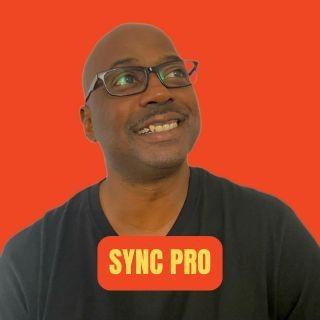
Eric Campbell is the founder and sole admin of The Music Licensing Club, listed on Skool under the handle ericmakesmusic with Tucson, Arizona as his location. His profile title describes him as a music creator and sync licensing expert sharing what he has learned from over a decade writing songs for TV, films and ads. His about page names placements including Chicago Fire, Blue's Clues and Baby Shark, advertising work for BMW, Nissan, Mountain Dew and Snickers, and a role as a sync agent representing more than 1,000 songs.
What does the about page say?
It opens by denying the premise of the entire creator-music economy, names the buyers, then produces the credential. Below is that copy as published, with emoji replaced by plain markers, bullet markup converted to plain bullets and curly apostrophes set straight, and nothing else altered, which is how we set marked-up copy here. Hover a number for our reading.
Most musicians are taught to chase streams, followers, and attention.
The Music Licensing Club teaches a different business model: creating and licensing music for companies
2TV networks, filmmakers, advertisers, brands, and music libraries need music. They're not necessarily looking for famous artists - they're looking for the right song, delivered professionally and ready to license
Inside, learn how sync licensing works, what these music buyers need, and how to build a pitch-ready catalog
Created by Eric Campbell:
3[fire] 10+ years writing songs for TV & ads
[fire] 100's of placements - Chicago Fire, Blue's Clues, Baby Shark, etc
[fire] Ads for BMW, Nissan, Mountain Dew, Snickers etc
[fire] Sync Agent representing 1,000+ songs
What's Inside
[check] Sync 101 + Sync Playbooks
4[check] 90-Day Pitch-Ready Catalog
[check] The Vault of Licensing Agencies
5[check] Secure Pitch Opportunities
[check] Song Feedback
[check] Weekly Live Coaching
[bolt] Stop waiting for an audience. Start building music companies can license.
The placement credits, brand campaigns, the "100's of placements" figure and the 1,000 or more songs represented are the community's own published statements, reproduced as written, and are not claims made or verified by this site. Chicago Fire, Blue's Clues, Baby Shark, BMW, Nissan, Mountain Dew and Snickers are named on the community's page and are trademarks of their respective owners; naming them implies no endorsement of this community by any of them. Nothing here is a prediction that any member will earn licensing income. The price, tier structure, roster and review score are as displayed on 5 September 2026; confirm them on the community's own page.
How does a $9 room collect $12.39 a member?
Through tiers the page does not price. This room carries three membership products, standard, premium and vip, and Skool publishes only the cheapest. $4,722.08 spread across 381 listed accounts is $12.39 each, which is 137.7% of the $9 button, and no mix of $9 seats and free seats can average above $9.
That makes the $9 an admission price rather than a revenue price. It is low enough that the decision costs a buyer almost nothing to make, it filters out very few people, and it puts 381 people inside a room where the higher tiers and the pitch opportunities are visible. The revenue is being earned above the door, not at it.
The trade-off shows up in the review count. Three published reviews on a 380 day old room with 381 members is roughly one review per 127 accounts, and at 4.7 it is the only score under 5.0 in this batch. One explanation is that a cheap door admits people who are less committed, and less committed members review less often; we cannot test that from outside.
| Reading on 5 September 2026 | The Music Licensing Club | The other four we read |
|---|---|---|
| Price per month | $9 | $29 to $500 |
| Members | 381 | 15 to 240 |
| Admins | 1 | 1 to 5 |
| Monthly recurring revenue | $4,722.08 | $3,750.00 to $5,441.50 |
| Revenue per member as share of price | 137.7% | 32.2% to 139.9% |
| Listed traffic | 2,793 | 84 to 1,916 |
The join button price is a floor, a ceiling, or a fiction: Across the five rooms we read on 5 September, published prices ran from $9 to $500, a spread of 55.6 times, while their revenues sat inside a band of just $1,691.50. The button tells you almost nothing about the business behind it. [Skool membership tiers](/blog/skool-membership-tiers) covers the structures that break the link, and [how to price a Skool community](/blog/how-to-price-a-skool-community) covers where to put the door.
Music licensing compared with the platforms musicians already use
Most musicians meet this business from the other side, as a catalog they upload to. The distinction this community sells is between placing your music yourself and licensing it through a marketplace, and the two have different economics.
| Route | What it is | Who chooses the song | Typical writer position |
|---|---|---|---|
| Direct pitching to supervisors | You or an agent pitch to the show, brand or agency | A music supervisor | Fees and royalties negotiated per placement |
| Sync agent or library | A third party represents your catalog and pitches for you | The agent's client | Split with the agent or library |
| Subscription stock platforms such as Artlist, Musicbed or Epidemic Sound | Buyers pay a subscription for unlimited use | The end customer, self-serve | Paid from a pool, typically no per-use fee |
| Pitch marketplaces and catalog services such as TAXI or Songtradr | You submit to briefs, or list a catalog for others to license | A screener, then the client | Terms differ by service; some charge membership or submission fees, others take a share |
This page sells the first two routes. The 90-Day Pitch-Ready Catalog builds the asset, the Vault of Licensing Agencies is the contact list, and the pitch opportunities are presumably routed through the founder's own agent relationships, though the page does not say so. That last item is the only one a competitor cannot copy by writing better courses.
None of the platforms above are affiliated with this community, and figures for what any of them pay vary widely by deal and are not published in a way that supports a fair comparison. If you are choosing between them, read each platform's own current terms.
The formula you can copy
Deny the premise the whole niche is built on. "Without fans or streams" is a bigger promise than any feature list, and it works because the reader has already failed at the thing being denied. Every niche has one of these sentences available.
Name the buyer, not the audience. TV networks, filmmakers, advertisers and libraries is a market a musician can actually picture calling. That specificity is what turns an abstract dream into a plan.
Use checkable credentials. Named shows and brands can be verified by anyone with a search bar, which is a different class of proof from a revenue screenshot. Print the open-ended ones, such as "100's of placements," as the claims they are.
Put the door on the floor and the revenue above it. $9 with a free trial removes every reason not to look, and the 137.7% collection rate says the money is upstairs. It is the same structure we read at Practice Room Pro with a free front door, and it is the opposite of the $500 door in this same batch. For the sync-side alternative in the same category, see The Sync Alliance.
Frequently asked questions
What is The Music Licensing Club on Skool?
It is a private paid Skool community founded by Eric Campbell on 21 August 2025 that teaches musicians to create and license music for companies rather than build an audience. On 5 September 2026 it listed 381 members, 1 admin, 1,046 posts and 15 courses across 124 modules, including a 90-Day Pitch-Ready Catalog, a directory of licensing agencies, pitch opportunities, song feedback and weekly live coaching.
How much does The Music Licensing Club cost?
$9 a month on the join button as displayed on 5 September 2026, with a free trial enabled. The room runs three membership tiers, standard, premium and vip, and only the entry price is public. The revenue per member of $12.39 is above the $9 button, so the paid tiers above it are where the business actually sits.
How do I get my music on TV shows?
The practical route has three parts: write to what productions actually license rather than to your own artistic brief, register with a performing rights organisation so broadcast royalties can reach you, and get your catalog in front of the people who choose songs, which means music supervisors, sync agents or libraries. What a community like this sells is the third part, because the first two are learnable from free material and the third depends on relationships.
How much does it cost to license a song?
There is no standard figure. A sync fee for a national television advertisement using a well-known recording can run to six figures, while a cue placed in a background scene through a library may pay a small fee plus performance royalties collected later. The price depends on the media, territory, term and how well known the recording is, which is why productions with small budgets license from catalogs of unknown writers.
What is the difference between music licensing and music publishing?
Publishing is the ownership and administration of the composition itself, including collecting royalties. Licensing is the act of granting permission to use it in a specific context. A sync licence typically needs clearance from both the composition side, held by the publisher, and the recording side, held by whoever owns the master, which is why writers who own both are easier for productions to clear.
How much does The Music Licensing Club earn?
$4,722.08 in monthly recurring revenue according to Skool's public leaderboard on 5 September 2026, ranked 27th in Music and 1,468th globally, with a thirty day change of plus $666.50, or 16.4%. Across the 381 listed accounts that is $12.39 each, which is 137.7% of the $9 sticker and is most readily explained by paid tiers above the published one.
Start your Skool community
Ready to build a community of your own? Start on Skool through our link. We may earn a commission if you create and keep a paid community, at no extra cost to you.
Start your Skool community →Keep reading
Jooba Guitar: Jaco Uys Sells a $10 Room for $3 on Skool

Dave Simpson Guitar World: The $35 Skool Room Reviewed

Clarity Guitar Studio Review: Andre Fludd's $69 Skool
Alex Graf Bluegrass Guitar: Inside the $25 Skool Club

Shredders University Review: Jack Wood's $127 Skool

Guitar Breakthroughs: Tony Cull's $29 Skool Reviewed

Drumline Accelerator: The $500 Skool for Auditions

Piano Walkers Review: Antonio Romero's $29 Piano Skool
VOCES by Ingrid Rosario: The $27 Skool Room With a Fully Paid Roster