Marthyn's Drum Camp: The $49 Double Bass Skool
Marthyn's Drum Camp is Marthyn Jovanovic's double bass drumming community on Skool, 378 members at $49 per month with a 7-day trial. A breakdown of the page that sells a BPM number instead of a feeling.
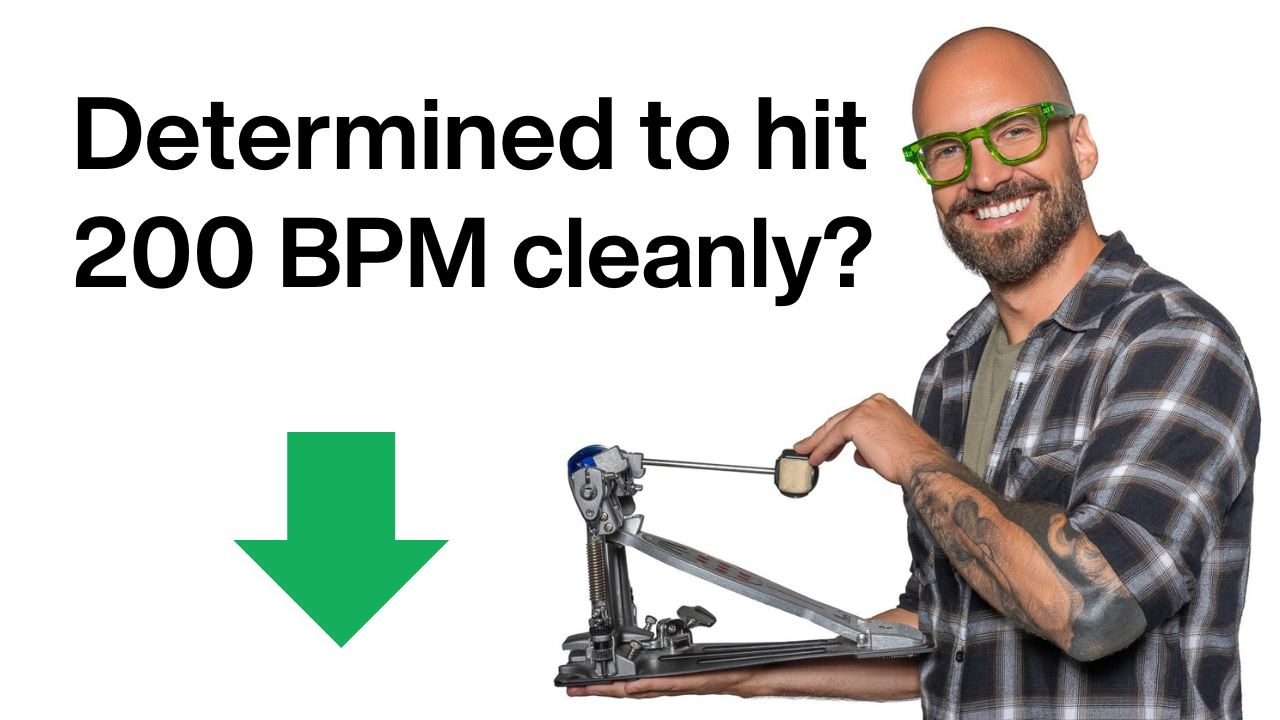
Marthyn's Drum Camp is Marthyn Jovanovic's private Skool community for rock and metal drummers learning double bass, with 378 members at $49 per month and a seven-day free trial. It sits at rank 3 in the Skool Games Music top 50. The page is unusual for one reason: almost every promise on it is a number with a unit attached.
The numbers
- Music niche (double bass drumming for rock and metal)
- Rank 3 in the Skool Games Music top 50
- 378 members, private
- $49/mo with a 7-day free trial
- 1 admin, the founder
- 4,529 posts
- 5.0 rating from 5 reviews
- Stated target: clean double bass at 200+ BPM
Who is Marthyn Jovanovic?
Marthyn Jovanovic is a drummer and drum coach based in Vienna, Austria, who posts on Skool as @marthyn. His Skool profile describes coaching drummers who struggle with double bass so they can play along to their favourite songs, at band rehearsals and on stage. He has been on the platform since February 2022.
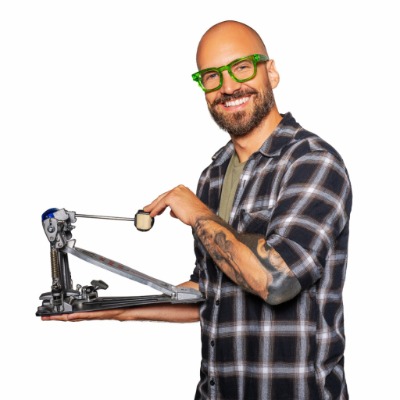
He is the sole admin of a room with 378 paying members and 4,529 posts, which is the thinnest staffing we have logged against a roster of that size in any category.
How Marthyn's Drum Camp sells
The page sells a measurement. The first line names the outcome as a speed, 200+ BPM, and a timeframe, months rather than years, so a drummer can check the claim against their own metronome before they read another word.
That matters because double bass is one of the few musical skills with a scoreboard already built in. A metronome settles the question of whether you are playing 180 BPM, which is not true of tone, feel or a mix. This one picked a skill where the buyer can check the claim tonight.
What the about page actually says
Below is the Marthyn's Drum Camp about page word for word, with the key parts numbered. Hover a number to see what each line is doing.
27-Day Free Trial. Cancel in 2 clicks.
What's Inside
3The 2 techniques that actually work: Flat Foot (70-175 BPM) + Ankle (150-230+ BPM)
Floor-to-pedal training: build the right muscle groups, then transfer
Weekly Live Q&A Coaching with Marthyn
Step-by-step practice roadmap
4320+ rock & metal drummers breaking through together
I'm Marthyn. I broke past 200 BPM by ignoring 90% of what's taught online and mastering the 2 techniques that actually work.
Join 320+ drummers who stopped wasting years on techniques that don't move the needle.
5Stop guessing. Skip the burnout. Master double bass drumming fast.
Are you ready to break through?
CLICK THE YELLOW BUTTON to start your free trial
Printing the method on the sales page
The most transferable move here is technique number three. Most coaching pages guard the method and sell the result. This page names both techniques, Flat Foot and Ankle, and attaches a working BPM range to each one, which tells a reader exactly what they are buying before they pay.
The reason this does not cannibalise the sale is that a technique name is not a technique. A drummer who reads "Flat Foot, 70 to 175 BPM" now knows two useful things: that there is a structured answer to their problem, and that they do not have it. The specificity proves the method exists. It does not transmit it.
There is a second effect worth noting. Naming the BPM bands quietly disqualifies the wrong buyer. A drummer happy at 120 BPM does not need the ankle technique and will not join, which keeps the room full of people with the same problem.
Give away the map, sell the walk: naming your method and its boundaries is proof that a method exists. Buyers do not pay for the name of the technique, they pay for the sequence, the feedback and the person who tells them when to move on.
The staffing question at one admin per 378
One admin against 378 paying members is the leanest ratio we have recorded at this roster size. Larger rooms go leaner still, and the same day we broke down a 37,025-member music production community running on sixteen admins, one per 2,314, but that room sells a curriculum rather than a coach. Across our Health breakdowns the pattern held that concierge promises, meaning individual attention on demand, get staffed at roughly one admin per 30 to 50 members and priced at $99 or more, while programme promises get staffed thin and priced at $19 to $35. At $49 with a single admin this room is priced above that second band and staffed below the first, and the page is careful about what it promises in return.
Read the deliverables again. The live element is a weekly group Q and A, not unlimited one to one feedback. The rest is a roadmap and a library. That is a promise one person can keep every week for years, which is probably why 4,529 posts have accumulated under it.
| Promise on the page | What it costs the founder weekly | Scales past 378? |
|---|---|---|
| Weekly live Q and A | One fixed session, group format | Yes |
| Step-by-step practice roadmap | Built once, maintained | Yes |
| Floor-to-pedal training method | Built once | Yes |
| Community message board | Moderation, minutes a day | Yes, with help |
The page does not promise one to one video feedback, which is the line that would break first.
The lesson is not that thin staffing is clever. It is that the offer and the staffing were designed together. For how founders set that price, see how to price a Skool community.
The social proof is written below the real number
The page advertises a 320+ figure twice, once as "320+ rock & metal drummers breaking through together" and once as "Join 320+ drummers", while the live member counter reads 378. The claim is conservative and therefore still true.
We logged the opposite failure earlier in August, where a fitness community advertised "trusted by 1,200+ members" on the same screen as a live counter reading 1.1k and a promise that the price would rise at 1,200 members, contradicting itself three ways. Rounding down survives growth. Rounding up expires the day someone checks.
The funnel, step by step
The trial does the whole job of acquisition. A drummer can join, sit in one live session, check their own BPM against the roadmap and decide, all inside seven days. For what a trial covers on the platform, see the Skool free trial explained.
The formula you can copy
Pick an outcome your buyer can measure without you. Speed, weight, word count, revenue, anything with a unit. It removes the argument about whether the thing worked and it makes your headline verifiable rather than persuasive.
Name your method and its limits. Two techniques with BPM ranges attached is more convincing than any paragraph about experience, and it filters out people the method is not for before they pay.
Design the promise around the staffing you actually have. A weekly group call is a promise one person can keep forever. Unlimited one to one is not. See how other founders handle this in how to write a Skool about page.
Frequently asked questions
What is Marthyn's Drum Camp on Skool?
Marthyn's Drum Camp is a private paid Skool community for rock and metal drummers working on double bass, run by Vienna-based drum coach Marthyn Jovanovic, with 378 members at $49 per month and a seven-day free trial. Members get two named foot techniques with BPM ranges, floor-to-pedal training, a weekly live Q and A with the founder and a step-by-step practice roadmap.
How much does Marthyn's Drum Camp cost?
The live join button reads $49 per month after a seven-day free trial, and the page states you can cancel in two clicks. Prices on Skool are set by the community owner and can change, so check the live join button before you join.
What is the heel toe technique in double bass drumming?
Heel toe is a bass drum foot technique that gets two strokes from one motion, dropping the heel to play the first note with the ball of the foot and then rocking forward onto the toe to play the second. It is one of the standard approaches to fast double bass alongside flat foot, swivel and ankle motion, and which one suits you depends on your pedal setup and leg mechanics. This community's page names flat foot and ankle as the two it teaches.
Is double bass drumming hard to learn?
The first stage is not especially hard, since most drummers can play basic double bass patterns slowly within weeks. The difficulty is speed with control, because the weaker foot has to match the stronger one cleanly and the technique that carries a drummer through slower tempos often runs out somewhere above it. This community's page puts the flat-foot ceiling at 175 BPM and reserves the ankle technique for 150 BPM and up, which is its own framing of where that handover happens. That transition point is where many self-taught drummers stall, and it is the problem communities like this one sell into.
Who is Marthyn Jovanovic?
Marthyn Jovanovic is a drummer and drum coach who lists Vienna, Austria as his location and who founded Marthyn's Drum Camp on Skool, running it as its only admin. His Skool bio describes coaching drummers who struggle with double bass so they can play along to favourite songs, at band rehearsals and on stage.
What is the lesson for other community builders?
Sell an outcome your buyer can measure themselves, then design the delivery around the staffing you actually have. This page names a speed, names the two techniques it teaches with their working ranges, and promises one weekly group session rather than unlimited individual attention, which is why one person can run a 378-member room without the promise breaking.
Start your Skool community
Ready to build a community of your own? Start on Skool through our link. We may earn a commission if you create and keep a paid community, at no extra cost to you.
Start your Skool community →Keep reading

Drumline Accelerator: The $500 Skool for Auditions
Jooba Guitar: Jaco Uys Sells a $10 Room for $3 on Skool

Dave Simpson Guitar World: The $35 Skool Room Reviewed

Clarity Guitar Studio Review: Andre Fludd's $69 Skool
Alex Graf Bluegrass Guitar: Inside the $25 Skool Club

Shredders University Review: Jack Wood's $127 Skool

The Music Licensing Club: Eric Campbell's $9 Skool

Guitar Breakthroughs: Tony Cull's $29 Skool Reviewed

Piano Walkers Review: Antonio Romero's $29 Piano Skool