The Screenwriter's Forge: How a Shrek 2 Screenwriter Sells 682 Members at $7 a Month
The Screenwriter's Forge is J. David Stem's Skool community for screenwriters: 682 members at $7 per month with live table reads and a first-10-pages analysis. A breakdown of why a $2.5 billion box office credential is priced at the bottom of the platform.
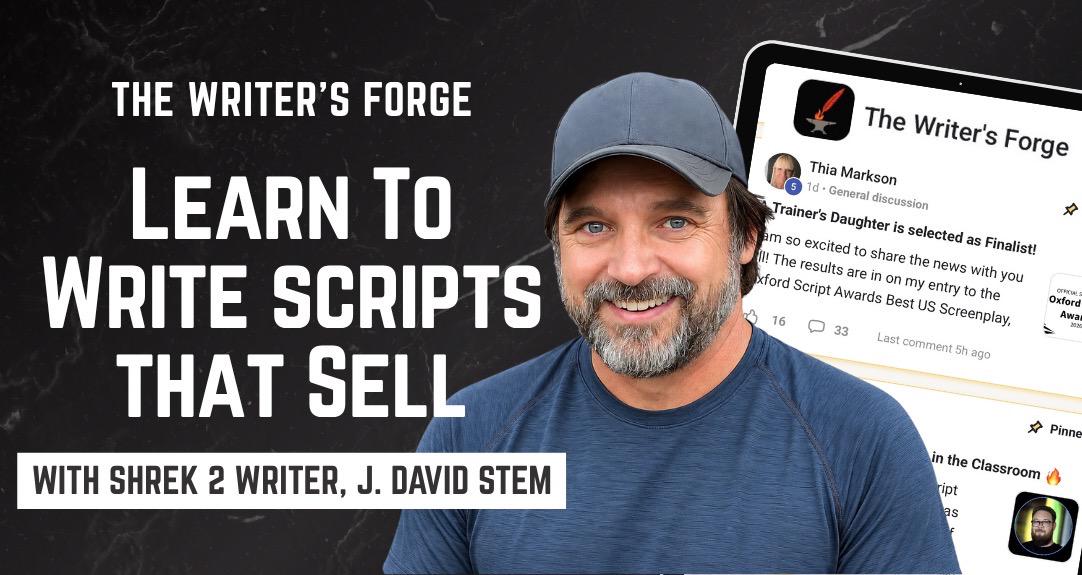
The Screenwriter's Forge charges $7 a month and is run by a screenwriter with Shrek 2, Jimmy Neutron and Disenchanted on his credits. That combination is the most extreme mismatch between credential and price anywhere in the Hobbies category of the Skool leaderboard, and the about page is fully aware of it. It says the quiet part out loud: "For $7? It's ridiculous." What follows that sentence is the actual business model.
The numbers
- Hobbies niche (screenwriting)
- Top-22 in the Hobbies category on the Skool leaderboard
- 682 members at the time of writing
- $7/mo, at the floor of Skool's workable price range
- 4 admins for 682 members
- First 10 pages analysed against five named criteria
- Founder credits include Shrek 2, Jimmy Neutron and Disenchanted
- 30+ years of stated professional experience
The founder

The credential is doing something specific here that a general one could not. Screenwriting is a field where advice is abundant and almost none of it comes from someone who has been paid for a produced feature. Naming three titles a reader has certainly seen removes the question the buyer usually cannot answer, which is whether the person giving notes has ever survived the process they are describing.
What The Screenwriter's Forge sells
The copy opens by naming a specific failure, moves straight to the credential, lists three deliverables, then addresses the price directly rather than hoping the reader will not notice it. Below is the about page word for word, with the key moves numbered. Hover a number to see what each line is doing.
2You read books. OD'd on YouTube. Paid for coverage, but got vague notes that left you guessing how to fix your script.
Enough.
3I'm screenwriter J. David Stem (Shrek 2, Jimmy Neutron, Disenchanted), and I built The Screenwriter's Forge to help you stop guessing and start thinking like a professional.
You get:
4✅ THE AGENT TEST: Your first 10 pages analyzed for Voice, Character, Premise, World & Breaking Point.
✅ LIVE TABLE READ + COACHING: Hear your pages performed and get live feedback from me and your peers.
✅ CLEAR MARCHING ORDERS: Know what's working, what isn't, and how to fix it.
5For $7? It's ridiculous. But you show me you're willing to put skin in the game. And I show up w 30+ years of expertise and my eyes on your pages.
Plus, 650+ serious writers doing the work w you.
Enough talking. Read the reviews below. Bring your first 10 pages like those folks did. Find out where you stand.
Your script will thank you.
How they sell
The first move is naming the competitor's failure mode instead of the competitor. "Paid for coverage, but got vague notes that left you guessing" describes an experience nearly every serious amateur screenwriter has had and paid between $75 and $300 for. It does not need to name a coverage service, because the reader supplies the name themselves. Everything after that line is read as the fix for a specific disappointment rather than as one more option.
The second is converting feedback into a rubric. "Voice, Character, Premise, World and Breaking Point" is the single most commercially useful line on the page. Script notes usually arrive as taste, which a writer can dismiss. Five named axes make the assessment feel like a test with an answer key, and crucially they let the buyer imagine the deliverable in advance. That is what makes a $7 purchase an obvious yes rather than a gamble.
The third is addressing the price head on. Most pages at the bottom of a market hope the reader reads low price as accessibility. This one says the price is ridiculous, then reframes it as a commitment test: $7 is not what the coaching is worth, it is proof you will actually send pages. That single reframe protects the credential from the discount. Without it, a writer might reasonably wonder what is wrong with a Shrek 2 screenwriter charging less than a sandwich.
Why $7 with a $2.5B credential is not a mistake
| The Screenwriter's Forge | Ground Control Film School | |
|---|---|---|
| Price | $7/month | $900/month |
| Members | 682 | 65 |
| Admins | 4 | 2 |
| Entry | join button | application form |
| What the price filters for | willingness to submit pages | budget and commercial intent |
| Revenue driver | volume | margin |
Both communities appear in the same category on the same leaderboard and are built on opposite theories of what a price is for. Ground Control uses price to keep the room small enough to serve. The Forge uses price to make the room as large as possible while still excluding people who will never submit anything.
The Forge's model only works because of what it asks for in return. A member who pays $7 and never brings pages costs the founder nothing. A member who brings pages gets read, and 682 people at $7 funds four admins and a weekly live session. The rubric is what makes it survivable at scale, because assessment against five fixed criteria is far faster than freeform notes and can be taught to the other admins. Compare the 63-member community charging $200 for 24/7 direct coaching, where the promise cannot be delegated and the roster therefore cannot grow.
The live table read is the real product
The deliverable most likely to retain a member is the one that is hardest to get anywhere else. Anyone can read a screenwriting book, and coverage services will send notes for money. Hearing your own pages performed aloud by other people, in front of a professional who then comments, is close to impossible for an amateur writer to arrange.
It is also the deliverable that improves as the room fills. More members means more voices for a table read and more peers whose feedback is worth hearing. That is why the Forge can carry 682 people where a coaching-first community cannot: the flagship experience gets better with density rather than worse. Our breakdown of Skool membership tiers covers how communities gate this kind of live element when they want a premium layer.
Turn feedback into a rubric before you sell it. "Your first 10 pages analyzed for Voice, Character, Premise, World and Breaking Point" sells because the buyer can picture the output. "Expert feedback on your script" does not, because it could mean anything. Name your axes, then assess against them. It makes the promise concrete, makes delivery faster, and makes it possible to hand the work to someone else.
The formula you can copy
Open with the reader's failed effort, not their unfulfilled desire. "You've rewritten your ass off" beats "write a better screenplay" because only one of them proves you have met the person who is actually reading.
Name what your buyer has already bought and why it disappointed them. You do not have to name a competitor. Describing the disappointment is enough, because the reader supplies the brand.
If your price is far below what your credential implies, explain it. Silence invites the reader to assume something is wrong. Framing a low price as a commitment test converts a suspicious number into a filter you chose.
Build your flagship deliverable out of something that improves with more members if you want volume. A table read needs a room. Personal coaching needs an empty calendar. See how to price a Skool community and how to write a Skool about page.
Frequently asked questions
What is The Screenwriter's Forge?
A private Skool community founded by screenwriter J. David Stem for aspiring screenwriters. It lists 682 members at $7 per month with four admins, and includes an analysis of the member's first ten pages against five named criteria, live table reads where pages are performed and critiqued, and specific direction on what to fix.
Who is J. David Stem?
A professional screenwriter whose credits, as stated on his Skool profile and community about page, include Shrek 2, Jimmy Neutron, Rugrats and Disenchanted. His profile describes him as a $2.5 billion screenwriter, referring to box office across his work, and the about page states more than 30 years of expertise.
What is script coverage and is it worth paying for?
Coverage is a written assessment of a screenplay, traditionally produced by a studio or agency reader as an internal recommendation, and now sold directly to writers by a range of services. It typically includes a synopsis, a grade across several categories and general notes. The common complaint, which this community's about page names explicitly, is that the notes are too general to act on. If you buy coverage, the thing to check before paying is whether the output tells you what to change rather than only what is not working.
How do you sell a screenplay without an agent?
The routes writers describe most often are screenplay competitions with industry read-throughs for winners, script hosting and ranking platforms, direct queries to production companies that accept unsolicited material, and relationships built through workshops and writers' rooms. All of them depend on the first ten pages, which is why so much feedback in this field concentrates there. Nothing shortens the process; what changes the odds is having pages that survive a professional read.
Why would a produced screenwriter charge only $7 a month?
The about page answers this directly and calls the price ridiculous. The stated logic is that the fee is not payment for the expertise but proof the member will actually submit work. At 682 members, $7 also funds four admins and regular live sessions through volume rather than margin, and a low entry price maximises the number of writers in the room, which is what makes a live table read possible in the first place.
How is this different from a screenwriting course?
A course delivers information, which is now abundant and largely free. This sells assessment of your specific pages against fixed criteria, plus a live performance of your work. The distinction matters because most writers who are stuck do not lack information. They lack an accurate outside read on what is wrong with the thing they have already written.
What is the lesson for other community builders?
Two. First, convert your feedback promise into named criteria before you sell it, because a rubric is imaginable, delegable and fast, and freeform expertise is none of those things. Second, if your price looks wrong for your credential, say so on the page and give the reason. An unexplained low price reads as a defect; an explained one reads as a filter.
Start your Skool community
Ready to build a community of your own? Start on Skool through our link. We may earn a commission if you create and keep a paid community, at no extra cost to you.
Start your Skool community →Keep reading

Sams Landscape Painting School: The Three-Tier Skool Pricing Ladder Printed on the About Page
Ground Control Film School: How Casey Faris Charges $900 a Month for 65 Members on Skool

The Photo Project: How Megan O'Hare Built a 1,200-Member Skool Community at $7 a Month

The Acting Lab: How Tristan Spohn Charges $199 a Month for 197 Members on Skool

Real Dog Rehab: How Brian Ferguson Sells a $6,000 Dog Training System for $67 a Month on Skool
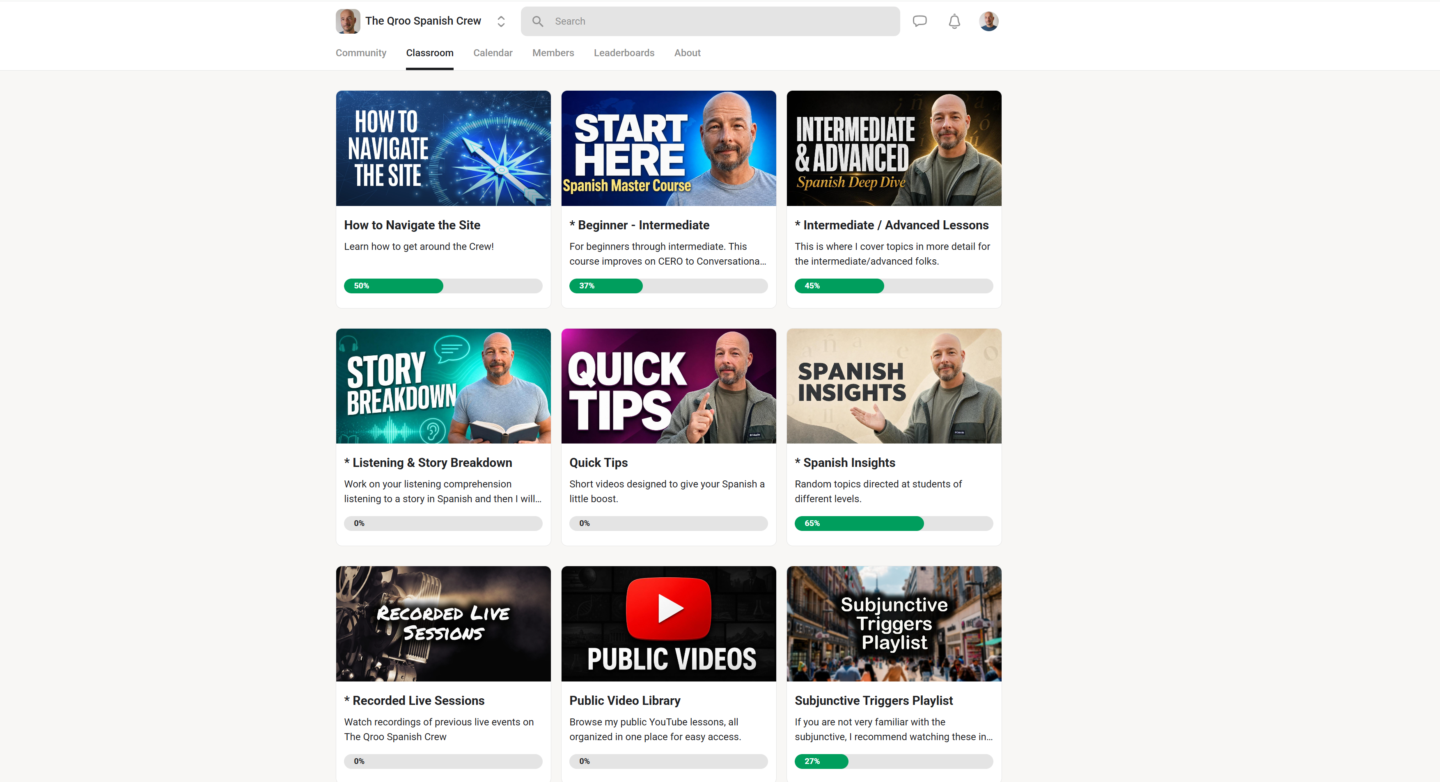
The Qroo Spanish Crew: How Qroo Paul Built an 8,200-Member Skool Community at $29 a Month

DY Salsa Dance Academy: How Diego Rivera Prices a 758-Member Skool Community at $49 a Month

Sweet Samantha Embroidery: Michelle Newsome on Skool

Perfumery: Michael Salazar's Skool Community Review
