Ground Control Film School: How Casey Faris Charges $900 a Month for 65 Members on Skool
Ground Control Film School is Casey Faris's application-only Skool community for video creators: 65 members at $900 per month, the highest price on the Hobbies leaderboard. A breakdown of the application gate, the 6-week promise and the DaVinci Resolve funnel behind it.
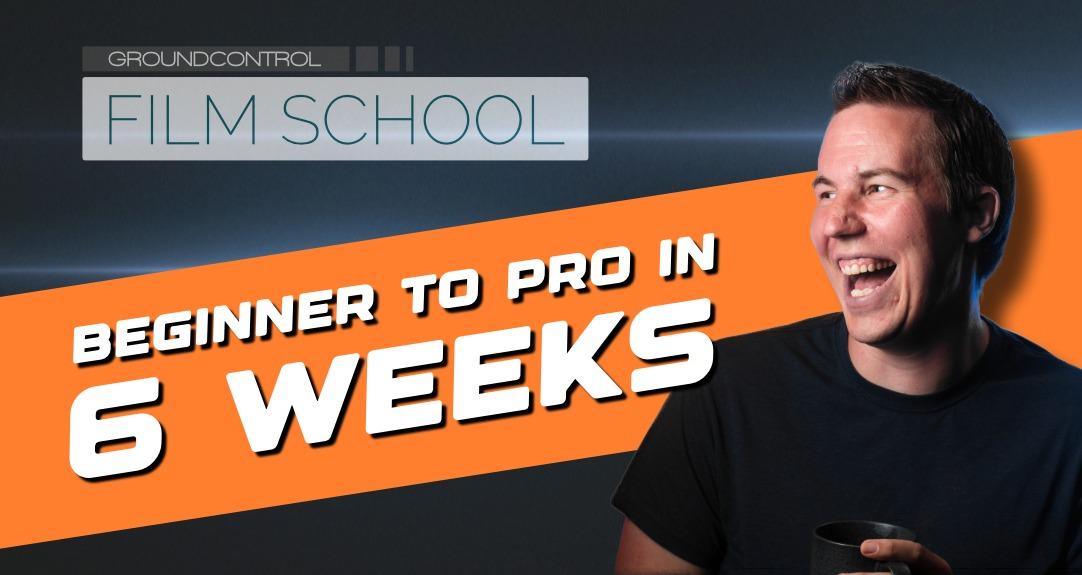
Ground Control Film School charges $900 a month and has 65 members, which makes it the most expensive community anywhere in the Hobbies category of the Skool leaderboard by a wide margin. It is also the only one in its rank neighbourhood you cannot simply join. There is no join button in the usual sense; the about page ends with an application link, and that single design choice explains both halves of the number.
The numbers
- Hobbies niche (video creation and editing)
- Top-17 in the Hobbies category on the Skool leaderboard
- 65 members, one of the smallest rosters in the category
- $900/mo, the highest listed price in the Hobbies top 50
- 6 weeks is the stated time to the promised outcome
- 2 admins for 65 members
- Entry is by application, not by clicking join
- Founder has 600k+ YouTube subscribers and 18 years of professional experience
The founder

The credential here is unusual in that it is verifiable without anyone claiming anything. A reader who has taught themselves DaVinci Resolve in the last few years has very likely already watched one of his tutorials without knowing it. That is a different kind of trust to a testimonial, and it is the reason a $900 price can appear on the page without a wall of proof underneath it.
What Ground Control Film School sells
The copy is short, names the buyer's commercial motive in the first sentence, and ends by asking the reader to apply rather than to pay. Below is the about page word for word, with the key moves numbered. Hover a number to see what each line is doing.
2We help beginner video creators start making professional quality videos in just 6 weeks, without feeling overwhelmed.
How do we do it?
🔥 Hands-On Video Curriculum to keep you focused on your goals.
3🔥 Actionable feedback on YOUR videos so you always know what to do next.
🔥 Group Workshops and Personal Coaching so you never get stuck.
This program is the proven way to create professional-level videos, even if you JUST started video creation.
This is perfect if you're
✅ Ready to make Professional-Quality Videos ASAP
4✅ Ready to get SERIOUS and INVEST in your video creation skills.
✅ Not afraid to work hard and get feedback on your videos
5APPLY NOW
How they sell
The first move is selling the commercial outcome rather than the craft. "The kind of videos that clients will actually pay for" appears before any mention of technique, and that ordering is what makes $900 arguable. A video editor deciding whether to spend $900 a month on skill is doing arithmetic against day rates, not against other courses. One paid client project covers several months. A page that sells better shots is competing with free YouTube tutorials, including the founder's own.
The second is the six-week finish line. This is the least discussed and most important line on the page. A monthly subscription with no stated endpoint asks the reader to commit to an unbounded number multiplied by $900, and no one can approve that. Naming six weeks turns the decision into roughly two payments for a defined outcome. It is the same reasoning that makes annual billing work for certifications and monthly billing work for memberships, applied in the opposite direction.
The third is the application gate. Removing the ability to buy immediately does three things at once: it filters people who cannot afford it before they ever see a refusal, it lets the founder cap the roster at a number he can personally give feedback to, and it reframes the purchase as an acceptance. At 65 members with two admins and a promise of personal coaching, the cap is not marketing. It is a capacity constraint that the gate exists to enforce.
Why the price and the roster are the same decision
| Ground Control Film School | A typical Skool community | |
|---|---|---|
| Price | $900/month | $9 to $99/month |
| Members | 65 | hundreds to thousands |
| Entry | application form | join button |
| Core promise | feedback on your specific videos | curriculum and peer community |
| Does the promise survive scale? | no | yes |
The table is the whole strategy. Ground Control's central deliverable is actionable feedback on your work, and feedback degrades with every member added, because it is drawn from a fixed pool of the founder's attention. A curriculum and a peer forum do the opposite: they get better as the room fills, because more members means more questions answered and more examples posted.
Once you know which of those two you are selling, the price and the roster size are not separate decisions. Ground Control sells attention, so it must stay small and charge accordingly. Its neighbours on the same leaderboard sell content and community, so they can grow and charge $7. Trying to run both models at once is how communities end up with a promise they cannot keep. We saw the same split at the extremes of the Sports board, where a 63-member community charged $200 for 24/7 direct coaching while a neighbour at rank 47 ran 1,422 members at $17.
The DaVinci Resolve funnel
The free channel is doing an enormous amount of work that the about page never mentions. Someone learning DaVinci Resolve searches for how to do a specific thing, finds a tutorial, and returns dozens of times over months. By the time they encounter a paid offer they have already decided the teaching is good, which is the expensive part of any sale and here it is free.
What the page does not do is name the channel or explain what the paid room adds that the tutorials do not. That is a gap. The strongest creator-led about pages state the difference explicitly, because a reader who has watched forty free videos will otherwise ask why the forty-first costs $900. In this case there is an obvious answer available and unstated: the tutorials show you how software works, and the program tells you what is wrong with the video you made.
Put a finish line on a high price. A $900 monthly fee with no stated duration asks the buyer to approve an unknown total. "Professional quality videos in just 6 weeks" converts that into roughly two payments for a defined result. If you charge at the top of your market, name the endpoint. The number is rarely the objection; the open-endedness is.
The formula you can copy
Sell the commercial outcome when you want to charge commercially. "Videos clients will pay for" survives a $900 price because the buyer compares it to income. "Better videos" does not, because the buyer compares it to free.
Decide whether your core promise improves or degrades with scale before you set a price. Feedback, coaching and access degrade, so cap the roster and charge for scarcity. Curriculum, workshops and peer community improve, so grow the roster and charge for access. Every pricing mistake we have catalogued comes from mixing the two.
Use an application when your capacity is the real constraint. It filters by budget without you having to state a disqualification, and it turns a purchase decision into an acceptance, which is a completely different emotional transaction.
Say what the paid room adds that your free channel does not. This page does not, and it is the one thing it is missing. See how to price a Skool community and how to write a Skool about page.
Frequently asked questions
What is Ground Control Film School?
An application-only Skool community founded by Casey Faris for video creators. It lists 65 members at $900 per month with two admins, and promises professional quality videos in six weeks through a hands-on curriculum, actionable feedback on the member's own videos, group workshops and personal coaching. It is the highest priced community in the Hobbies category top 50 on the Skool leaderboard.
Who is Casey Faris?
A video creator and educator who teaches DaVinci Resolve. His Skool bio states more than 600,000 YouTube subscribers and 18 years of professional experience, and describes having helped millions of beginner video creators make professional quality videos in DaVinci Resolve. He is listed on Skool under the handle caseyfaris.
How do you become a video editor with no experience?
The path most working editors describe is to build a small body of finished work rather than to complete more training. Learn one editor properly, finish three or four short projects end to end, and get specific feedback on each from someone who edits professionally. The gap that keeps beginners unpaid is almost never software knowledge, which is free and abundant, but the inability to see what is wrong with their own cut. That diagnostic gap is exactly what a feedback-based program like this one sells.
Is DaVinci Resolve better than Premiere Pro?
They are close enough that the honest answer is that it depends on the work. Resolve has a free version that is genuinely full-featured and the strongest colour grading tools of any mainstream editor, which is why it dominates among self-taught creators. Premiere Pro remains more common in agency and broadcast pipelines, so freelancers taking client work often need it regardless of preference. Final Cut Pro is fast on Apple hardware and CapCut serves short-form social. Learn one deeply first; the second is much easier than the first.
Is $900 a month reasonable for a video editing community?
It is far above the platform norm and only defensible against income rather than against other courses. A freelance editor billing client work recovers it with a single project, which is the comparison the page invites when it opens with videos clients will pay for. For a hobbyist it is not a reasonable figure, and the page says so indirectly by asking for readiness to invest. The finish line matters as much as the number: six weeks makes the real commitment roughly two payments.
Why do some Skool communities require an application?
Usually because the founder's personal attention is part of the product and cannot be scaled. An application caps the roster at a serviceable size, filters out people who cannot afford the price without an explicit refusal, and changes the buyer's frame from deciding to spend to hoping to be accepted. It costs discovery traffic, which is why it only makes sense at high prices where a small number of members produces meaningful revenue.
What is the lesson for other community builders?
Two. First, a high price needs a finish line, because an unbounded monthly commitment is a harder yes than a large number. Second, ask whether your main deliverable gets better or worse as members join, then set price and roster size to match. Ground Control answers that question honestly and prices accordingly, which is why 65 members at $900 sits on the same leaderboard as 8,000 members at $29.
Start your Skool community
Ready to build a community of your own? Start on Skool through our link. We may earn a commission if you create and keep a paid community, at no extra cost to you.
Start your Skool community →Keep reading

Viegas Academy: How Diego Viegas Turned Closed Doors Into a Waitlist for Video Editors
The Screenwriter's Forge: How a Shrek 2 Screenwriter Sells 682 Members at $7 a Month

Sams Landscape Painting School: The Three-Tier Skool Pricing Ladder Printed on the About Page
Fullstack Editor Club: How Tom Lulofs Sells Video Editors a Path to Full-Time Clients

The Photo Project: How Megan O'Hare Built a 1,200-Member Skool Community at $7 a Month

The Acting Lab: How Tristan Spohn Charges $199 a Month for 197 Members on Skool

Real Dog Rehab: How Brian Ferguson Sells a $6,000 Dog Training System for $67 a Month on Skool
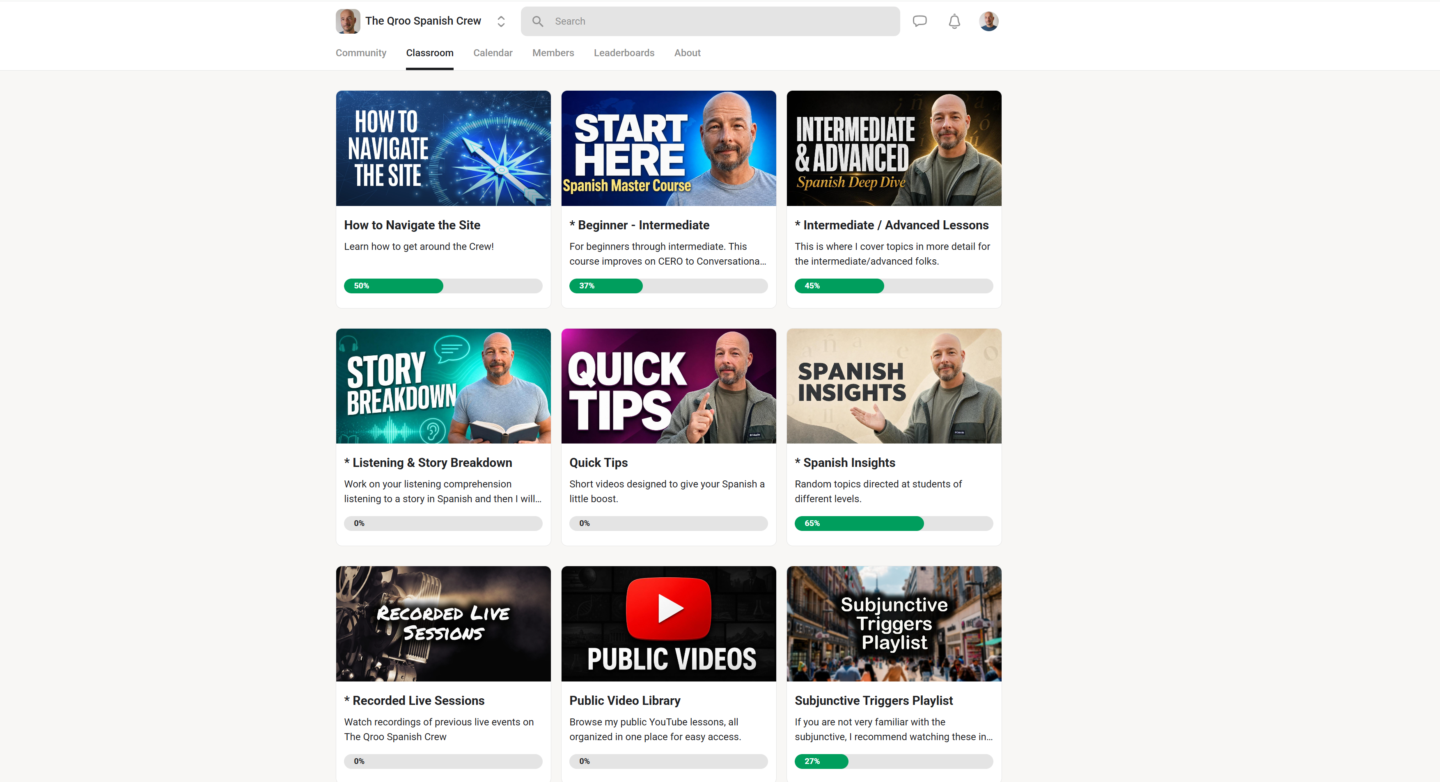
The Qroo Spanish Crew: How Qroo Paul Built an 8,200-Member Skool Community at $29 a Month

DY Salsa Dance Academy: How Diego Rivera Prices a 758-Member Skool Community at $49 a Month