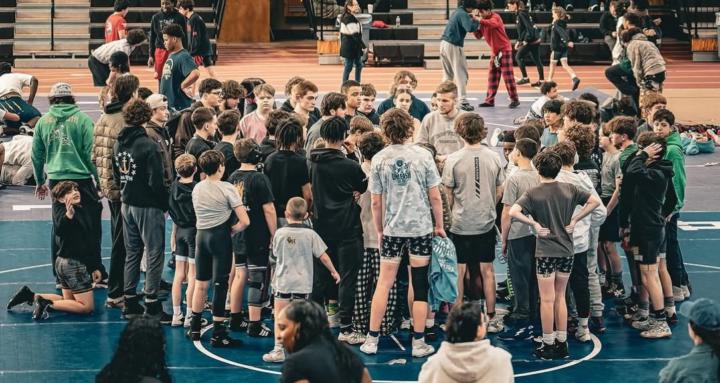
Ultimate Mobility: How Brian Nevison Built a 209-Member Skool Community for One Sport at $29 a Month
Ultimate Mobility is Brian Nevison's Skool community for Ultimate Frisbee players: 209 members at $29 a month, 723 posts, 18 courses and a single admin. A breakdown of how an extremely narrow niche and a founder story built on failure outsell a general mobility programme.

Ultimate Mobility sells mobility training to Ultimate Frisbee players. Not to athletes, not to field-sport athletes, not even to frisbee players generally, but to people who play one specific competitive sport. That is about as narrow as a paid community can be, and it has produced 209 members at $29 a month, 723 posts and 18 courses, all run by a single admin. It closes out the Sports category of the Skool leaderboard, and it is the cleanest argument on the whole board for going narrower than feels comfortable.
The numbers
- Sports niche (mobility training for Ultimate Frisbee)
- Top-50 in the Sports category on the Skool leaderboard
- 209 members
- $29/mo, with a free trial and a premium tier above
- 723 posts, 18 courses, 198 modules
- 1 admin, running the whole thing alone
- Founder has played the sport since 2005 and coached over 20,000 training sessions
The founder

The credential is deliberately double. One half is professional, which is 20,000 training sessions across more than fifteen years, and any competent strength coach could eventually accumulate it. The other half is that he has played the sport for two decades at a competitive level, and that is the part nobody can buy their way into. In a sport this small, the reader is not primarily assessing whether the coach knows anatomy. They are assessing whether he has ever laid out on a wet field and felt what that does to a shoulder.
What Ultimate Mobility sells
The copy is reproduced below exactly as it appears on the live about page, with the key moves numbered. Hover a number to see what each line is doing.
As an Ultimate player (and pro trainer) I pushed myself hard in training for many years and got extremely strong and "fit."
2But it didn't translate to feeling better, recovering better, or reducing pain and injuries - until I fully committed to prioritizing mobility training. Get more out of your training 👇
WHAT YOU GET:
✅ Training Education & Application I Use With Pro Athletes
3✅ Off-Season, Pre-Season, In-Season Programs
✅ Weekly Live Mobility Sessions
✅ Messaging Support & Troubleshooting
4✅ 1:1 Onboarding Call! (Premium Members)
WHY TRUST ME:
5Ultimate player since 2005 (college, club nationals, masters nationals)
Career S&C Coach: 20,000+ training sessions over 15+ years
Personally coached hundreds of Ultimate players through successful seasons
⭐️ Click that yellow button to join and lemme know what your goals are :)
- Brian
How they sell
The first move is the address line, and it is the whole business model compressed into two words. "Ultimate Frisbee Players" throws away every other athlete on the internet. What it buys in return is that the reader stops evaluating and starts recognising. A page that says "athletes" makes a frisbee player do translation work, wondering whether a programme built around running and lifting accounts for the specific things their sport does to a shoulder. A page that names the sport removes that entirely.
The second is that the founder story is a failure story. He trained hard, got strong and fit, and reports that it did not reduce his pain or improve his recovery. Experienced athletes have all tried the obvious thing, so a coach who opens by saying the obvious thing did not work for him either is instantly more credible than one who opens with a result. The turn to mobility then arrives as a conclusion the reader watched him reach rather than a product he is selling.
The third is the seasonal segmentation. Off-season, pre-season and in-season programmes divide the year into blocks, and a member finishing one block is standing at the entrance to the next. Compare that with a general mobility library, where every day is an equally good day to cancel. The calendar, not the content, is what holds a $29 subscription for multiple years.
Narrow niche, thick community
723 posts across 209 members is a busy room, and the reason is that everyone in it plays the same sport. When a member describes an injury, the other members know the movement that caused it without needing it explained. A mobility community aimed at "athletes" cannot do that, because a runner's hip complaint and a swimmer's shoulder complaint share almost no context, and the discussion flattens into generic advice.
That is also how one admin survives 209 members. Peer answers do the first pass, so Brian's messaging support handles the residue rather than the volume. It is the same effect we noted in The Arte of Coaching Kids BJJ, where a professional audience answers each other, and the inverse of Ebsayz Jiu Jitsu, where a promise of 24/7 one-to-one coaching forces the roster to stay tiny and the price to stay high.
The premium tier is designed around the same constraint. The one thing gated behind the upgrade is a 1:1 onboarding call, which is to say the only scarce resource in the whole operation. Everything that scales sits in the base tier, and the thing that cannot scale sits above it. Communities that gate more content behind premium tiers usually end up making the base tier feel deliberately incomplete, and this avoids that entirely.
What the narrow niche costs
The honest downside is the ceiling. Competitive Ultimate is a small global population, and a community that has decided to serve only that population has a hard limit on how large it can ever get. Two hundred and nine members at $29 is a real business for one person and will never be a large one without either raising the price or widening the sport.
There is a second cost that is easier to miss. A founder whose standing rests on being an insider has to stay an insider. The credential says "player since 2005" and includes masters nationals, which is a present-tense claim, and it would weaken the day it becomes a past-tense one. That is a pleasant obligation for someone who loves the sport and a trap for anyone copying the model into a sport they do not actually play.
Set against that, the acquisition maths are unusually kind. In a niche this tight there is no meaningful competition for the search term, the sport's own communities and tournaments are a directly addressable audience, and one satisfied member talks to teammates who are all qualified buyers. A general mobility coach has none of those advantages and pays for traffic instead.
The funnel, step by step
Gate the thing that does not scale, not more content: putting extra courses behind a premium tier makes your base tier feel deliberately incomplete. Putting your time behind it does not, because everyone accepts that attention is finite. Ultimate Mobility gates exactly one item, a 1:1 onboarding call, and leaves every programme available to everyone.
The formula you can copy
Name the sport, the job or the exact situation in your first two words. The readers you lose were never going to buy, and the ones you keep stop evaluating you and start recognising themselves.
Lead with what did not work for you. An experienced buyer has already tried the obvious solution, so a founder who admits the obvious solution failed is more believable than one who claims it succeeded.
Segment your year into blocks. A programme with an off-season, a pre-season and an in-season never presents the member with a moment where nothing is starting, which is when subscriptions get cancelled.
Earn the insider half of your credential or pick a different niche. Professional qualifications are purchasable and twenty years inside a community are not, and in a small niche the second one is what the reader is actually checking.
Then go narrower than feels comfortable. See how to niche down a Skool community and how to get your first Skool members.
Frequently asked questions
What is Ultimate Mobility?
A private Skool community founded by Brian Nevison for Ultimate Frisbee players, with 209 members at $29 per month plus a free trial and a premium tier. It includes off-season, pre-season and in-season programmes, weekly live mobility sessions, messaging support and troubleshooting, and a 1:1 onboarding call for premium members. It runs 18 courses across 198 modules with 723 posts and a single admin, and sits around rank 50 in the Sports category of the Skool leaderboard.
Who is Brian Nevison?
The founder of Ultimate Mobility. The about page states he has played Ultimate since 2005 through college, club nationals and masters nationals, works as a career strength and conditioning coach with more than 20,000 training sessions over 15-plus years, and has personally coached hundreds of Ultimate players.
How do you prevent injuries in Ultimate Frisbee?
The premise of this community is that strength and fitness alone do not do it, and that mobility work has to be the priority rather than an afterthought. In practice that means training joint range under load rather than only stretching, matching the programme to the phase of the season, and treating recovery as part of the plan instead of what happens on rest days. Layouts, hard cuts and repeated sprinting are what make the sport specific, so a general athletic programme will not address them. Any existing pain should be assessed by a clinician first.
What is mobility training and how is it different from stretching?
Stretching lengthens tissue passively. Mobility training builds usable, controlled range of motion at a joint, usually by moving through that range under some load or tension so the nervous system will actually let you access it in a game. That distinction is why an athlete can be flexible and still get hurt, and it is the argument this community is built on.
Is $29 a month worth it for a single sport?
The comparison is not other online memberships, it is the cost of one physiotherapy appointment, which in most countries exceeds a month here. The value depends on whether you actually follow a programme through a season rather than dipping into it, and the free trial exists so you can test that about yourself before committing.
Can a niche this narrow really support a business?
It supports this one. 209 paying members at $29 is a solid solo operation, and the narrowness is what makes it possible rather than what limits it: no competition for the search term, an audience that gathers at tournaments, and members who recruit teammates who are all qualified buyers. The trade is a genuine ceiling on size, which is a fair price for a business one person can run alone.
What is the lesson for other community builders?
Narrow beats broad when your audience already has somewhere to gather. Name them exactly, prove you are one of them and not just qualified to help them, then structure the year so there is always a next block starting. And gate your time rather than your content, because a base tier that feels complete is what makes the upgrade feel optional instead of extracted.
Start your Skool community
Ready to build a community of your own? Start on Skool through our link. We may earn a commission if you create and keep a paid community, at no extra cost to you.
Start your Skool community →Keep reading
Supple Athlete: The $75 Skool for Lifters Who Flare Up
The Movement: Roye Goldschmidt's $35 Mobility Skool Community

Testkarban-TARTAS Program: How Istvan Berecz Sells Body Maintenance to Desk Workers on Skool

Falka: How Marcell Farkas Sells Holistic Movement and a Pain-Free Spine on Skool

TOC Coach: How J.P. Nerbun Built a 1,422-Member Skool Community for Coaches at $17 a Month

Ebsayz Jiu Jitsu: How Sebastian Attard Charges $200 a Month for 1:1 BJJ Coaching With Only 63 Members

Ultimate Academy: How Eric Deng Turned Ultimate Frisbee Coaching Into a $49 Skool Community

Tumble Doctor Skills Club: How Alvin Davis Sells At-Home Tumbling for $30 a Month
The Practice HQ: How Dane Cvetkovic Runs a 411-Member Golf Skool Community Alone at $14 a Month