Build What People Pay For: John Missikos' Four-P Framework
John Missikos says he spent years building products before finding buyers. His Person, Pain, Promise, Prototype framework reverses that order.
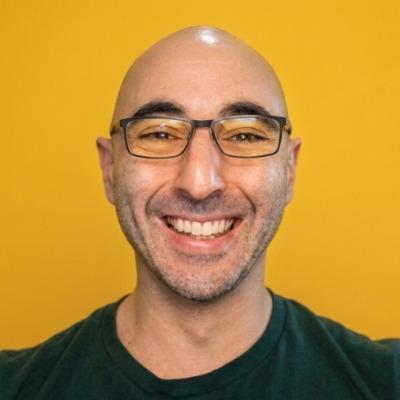
The fastest way to build the wrong product is to start with the product. Skool creator John Missikos says he did that for years, then used a four-part order to reverse the mistake: choose the person, identify a painful problem, state the before-and-after promise, and build the smallest prototype that can deliver it.
Source and founder context
- Framework: Person, Pain, Promise, Prototype
- Failed starts: churn app, automations and link detector
- Current community: MRR Max
- Current access: free
- Current roster: 146 members
- Captured: 5 October 2026
Why interesting products can still fail
Missikos described three projects that began with an interesting solution. The churn app reached people who did not yet have a meaningful churn problem. The automation offer required technical buyers even though its audience was not technical. The link detector found a fault but did not deliver the outcome a buyer wanted.
Those examples are one creator's account, not audited business results. The useful pattern is broader: an idea can be clever, functional and still fail because the person, pain or promised outcome is wrong. Repackaging it later does not repair the original mismatch.
2Pain: find the problem that is frequent, urgent or expensive enough to change behavior.
3Promise: describe the change without hiding behind features.
4Prototype: deliver the smallest version that can prove the promise.
5Use replies, calls, deposits or completed outcomes as evidence, not compliments.
How to test the four Ps before building a community
Write one sentence for each P. Then speak to five people who match the person definition. Ask when the pain last happened, what they tried, what it cost and what a useful result would look like. Do not pitch during the first half of the conversation.
Next, offer a manual prototype. A cohort, audit, workshop or office hour can test a community promise before you record a large classroom. Charge if the final offer will be paid. A free test measures attention; a paid test measures willingness to exchange money.
For the community itself, write a precise Skool about page, choose a sustainable price with our Skool pricing guide, design the first result while you start a Skool community and review the platform constraints in our Skool review.
What MRR Max adds to the story
Missikos' MRR Max About page showed a free, 146-member community when checked on 5 October. Its promise is narrower than the abandoned ideas he described: tools identify where a Skool community is leaking revenue and give the owner one next action. The page says the tools have been shown on Skool News and includes a creator-reported testimonial about finding a conversion bottleneck.
That does not prove the framework guarantees success. It does show the framework applied in public: one buyer, one painful metric problem, one action-oriented promise and small tools as the prototype.
The builder lesson: curriculum is not the first asset. Evidence that a specific person will act on a specific pain is the first asset. Build the classroom after that signal appears.
Frequently asked questions
What are the four Ps in John Missikos' framework?
They are Person, Pain, Promise and Prototype, in that order. The sequence starts with the buyer and problem before choosing the solution.
Why start with a person instead of a product?
A specific person makes the language, problem research, distribution channel and acceptable delivery format easier to verify.
How do I know whether a problem is painful enough?
Look for recent attempts to solve it, repeated cost, lost time, strong emotion or willingness to pay for a credible outcome.
What counts as a prototype for a Skool community?
A live workshop, small cohort, manual audit or limited office-hour group can test the promise before a large course library is built.
Should the first prototype be free?
Only if attention is the thing being tested. If the final offer will be paid, even a small deposit gives stronger buying evidence.
Does the four-P framework guarantee product-market fit?
No. It is a decision framework that exposes weak assumptions earlier. Outcomes still depend on the buyer, evidence, delivery and market.
Start your Skool community
Ready to build a community of your own? Start on Skool through our link. We may earn a commission if you create and keep a paid community, at no extra cost to you.
Start your Skool community →Keep reading

How to Handle Inactive Skool Community Members

William Brown Organic Validation Story: The Decision Before Facebook Ads
Stephen Buscema's Three-Workshop Launch: Timing, Tiers and the Missing Replay

Skool News #77: Custom Ads, Growth Tab and What Is Still Coming

Rhythm Skool Review: Dave Smith's Step, Clap, Say Practice Offer

Prolific Producer Collective Review: Philip Roder's Track-Finishing Offer

Lauren Messina's Member-Led Dance Project: Participation Beyond Posts

Judy Lee Paid Offer Templates Story: Two Upgrades, Then More Changes
Japanese Immersion Lab Review: Harry Hruz's Roadmap and Anki Offer
